“Devara Samaradhane” is a significant ritual performed in many Hindu households before any auspicious celebration or milestone event within the family. It reflects a deep-rooted cultural tradition of seeking the blessings of the Kula Devatha (family deity) to ensure the event is free from obstacles and to invoke prosperity, peace, and harmony for the family.
The term “Samaradhane” signifies an earnest offering or homage. It includes:
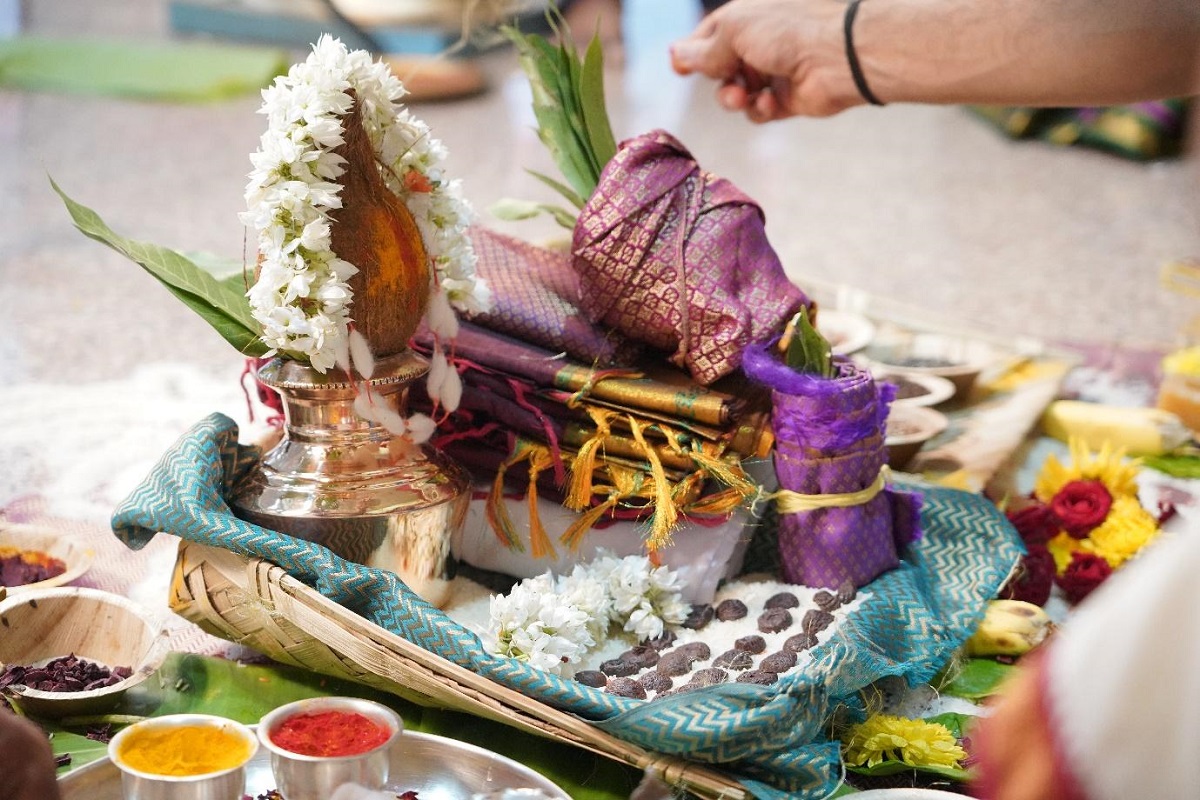
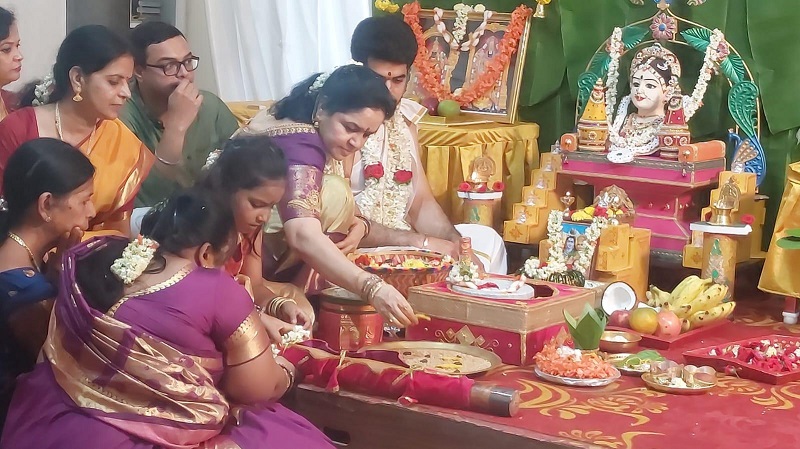
Prayers to the Kula Devatha: The ritual begins with prayers and offerings to the family deity, symbolizing gratitude and devotion. Sacred items such as fruits, flowers, and traditional offerings are used during the prayer.
Honoring Elders: Elders of the family are respected and honored, acknowledging their blessings and wisdom as integral to the well-being and success of the family.
Festive Lunch: A grand meal is prepared, often consisting of traditional and elaborate dishes. This meal is served to family members, guests, and the elders as part of the ritual.
This ceremony emphasizes family unity, reverence for tradition, and gratitude towards divine and ancestral forces.
The rituals performed on the day of Devara Samaradhane
Naandi: A ritual to seek blessings from ancestors, especially from the father’s side, for the continuation of the family lineage and prosperity.
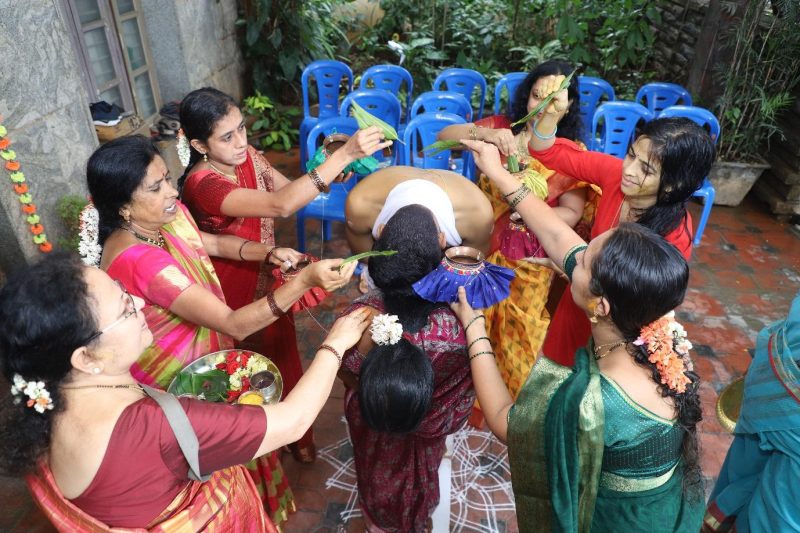
Malneeru: The bride/groom and their mother undergo a purification ceremony under the Chappara (sacred canopy), where holy water is sprinkled by five women. This symbolizes cleansing and preparation for the sacred wedding rituals.
Chappara Pooja: Worship of the Chappara and invocation of blessings from the goddesses for divine protection and well-being of the family.
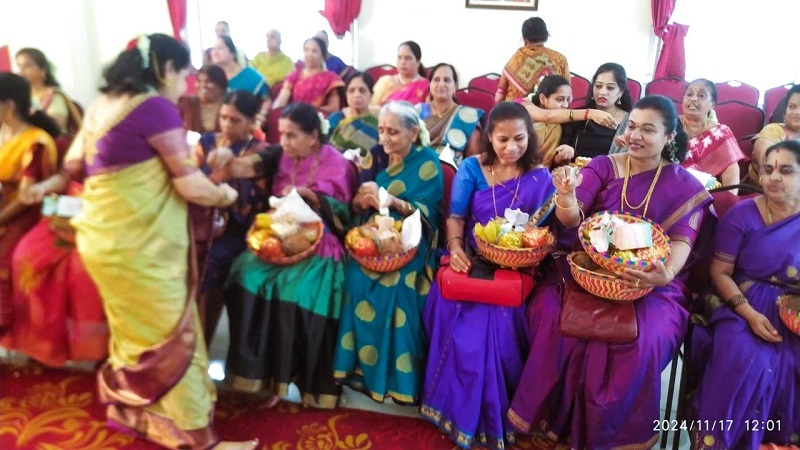
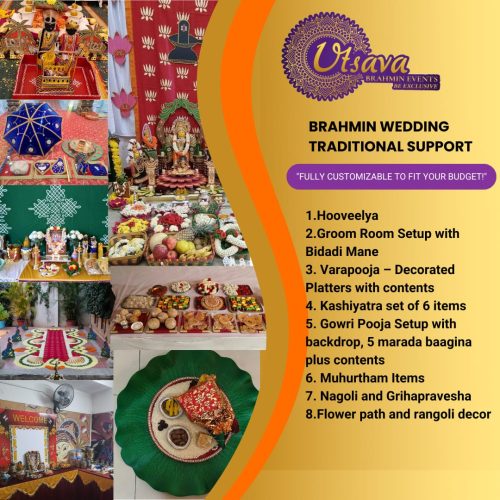
Hooveelya: A ceremony to honor and seek blessings from elderly women of the father’s ancestry. Fruits, flowers, turmeric, and kumkum are offered to the women in the family, symbolizing gratitude and respect.
These meaningful rituals, performed before the wedding day, create an auspicious start to the ceremonies while ensuring divine and ancestral blessings for the couple. Similar rituals take place simultaneously at both the bride’s and groom’s homes. These parallel ceremonies reflect the shared spiritual and cultural values of both families, uniting them in purpose and tradition before the wedding day.
Disclaimer: The information provided in this blog is for general informational purposes only and is published in good faith. Wedding rituals and customs may vary based on family traditions, regional practices, and community; readers are advised to consult their family elders or priests for specific guidance.