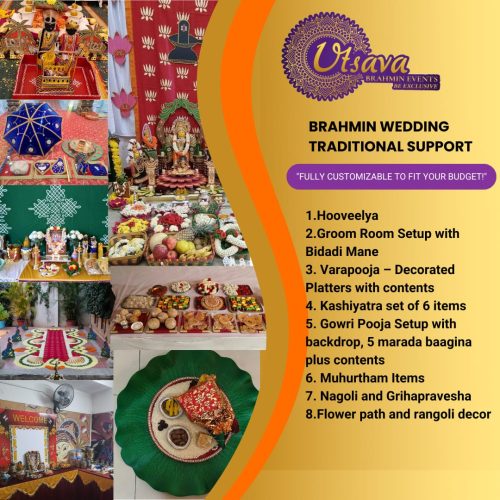
South Meets North India Hindu Wedding
South Meets North India Hindu Wedding
A South-North India Hindu Brahmin wedding in South Indian Brahmin style can be a beautiful amalgamation of traditions, ensuring both families feel included while respecting the essence of South Indian customs. Here’s a guide to plan such a wedding:
The style of the wedding – whether South Indian or North Indian – forms the foundation to consider everything else.
Importance of Gowri Puja before marriage:
- Blessings for Marital Harmony: The ritual is performed to invoke the blessings of Goddess Gowri for a long, happy, and prosperous married life.
- Good Fortune: It is believed that the Goddess blesses the bride with good luck, peace, and happiness in her new journey.
- Strength and Virtue: Praying to Gowri helps the bride imbibe qualities such as patience, strength, and love, which are considered vital for a harmonious marriage.
Key Points to Consider:
Mutual Agreement of Families & Blend of Traditions
- Both families should discuss their preferences with their elders and come to a decision
- If both families are open to adopting one style (South Indian or North Indian), choose based on feasibility, tradition, and comfort.
- If families want both cultures represented, it can be a fusion wedding. For instance, conduct the main rituals in South Indian style and incorporate a few North Indian customs during pre- or post-wedding events.
Practical Feasibility
- If the wedding is in South India, a South Indian Brahmin wedding might be more practical, and vice versa.
- Consider logistical aspects like the location, availability of venues, and vendors who specialize in a particular wedding style.
- Think of place where most of the relatives and friends can attend the wedding, it will reduce the transport and accommodation cost.
Budget Consideration
- Some elements, like attire, decor, and catering, can vary significantly in cost depending on the style. Factor this into the decision.
A South-North India Hindu Brahmin wedding in South Indian Brahmin style can be a beautiful amalgamation of traditions, ensuring both families feel included while respecting the essence of South Indian customs.
Tips for a Successful Blend
- Communicate with both families to ensure important traditions from each culture are respected.
- Personalize the ceremony by sharing the cultural significance of key rituals with guests.
- Blend Food, Attire, Rituals and Decor from both cultures to create harmony in visuals and experience.
- Use music from both cultures, mixing Carnatic music with Bollywood or regional songs.
- Highlight cultural harmony in invitations, wedding favors, and rituals to celebrate the union of two traditions.
Pre-Wedding Rituals
- Naandi : A ritual to seek blessings from the family deity for the smooth conduct of the wedding.
- Haldi and Mehndi Ceremonies : While Mehndi is typically North Indian, it can be blended with the South Indian “Naandi” ceremony where turmeric is applied to the bride and groom.
- Nischayathartham/Varapooja (Engagement) : This is a formal ceremony where both families confirm the wedding and couples exchange rings. Include traditional South Indian elements like betel leaves, nuts, fruits, and turmeric.
Wedding Day Rituals
- Venue Decor: Use North Indian-style mandaps with floral arrangements, drapes, and fairy lights. Incorporate brass lamps and rangoli to honor South Indian traditions
- Attire :
- Bride: Traditional lehenga or saree with kundan or polki jewelry. Include jasmine flowers in her hairstyle as a nod to South Indian culture.
- Groom: Sherwani or kurta with a safa (turban).
3. Main Rituals:
- Baraat: Groom’s procession with family dancing and music as he arrives at the venue.
- Kashi Yatra: The groom pretends to renounce worldly pleasures and go to Kashi, but the bride’s father persuades him to marry his daughter.
- Gowripooja: The bride offers prayers to Goddess Gowri for harmony and long lasting marriage.
- Varmala (Garland Exchange): Bride and groom exchange floral garlands.
- Kannika Dhanam: The bride’s father gives her away to the groom.
- Mangalya Dharanam: The groom ties the mangalsutra (thaali) around the bride’s neck, symbolizing their union.
- Sapthapadi: The couple takes seven steps around the sacred fire, signifying their vows OR
- Saat Phere (Seven Sacred Vows): The couple circles the sacred fire, taking vows
- Sindoor and Mangalsutra: The groom applies sindoor (vermilion) on the bride’s forehead and ties the mangalsutra.
Note: Mangalsutra is also prominent in South Indian weddings, so this step will feel familiar to both families
Post-Wedding Rituals
- Vidaai: The bride bids farewell to her family as she leaves for her marital home.
- Reception: Host a reception that features North Indian food and decor. Add a South Indian touch by including dishes like dosa, idli, and filter coffee on the menu.
FOOD options
To balance both cultures A South Indian Muhurtham menu during the wedding and a North Indian-style menu at the reception allows both families and guests to enjoy and celebrate each other’s traditions.
A South Indian Brahmin wedding meal is typically served on a banana leaf and is entirely vegetarian. The dishes are simple, traditional, and reflect South Indian Brahmin customs.
- Rice, sambhar, rasam, curd
- Vegetable curries, avial, poriyal
- Sweets like payasam and laddoo
- Filter coffee to conclude
Reception Menu (North Indian Style)
- Starters: Paneer tikka, chicken tikka, hara bhara kabab
- Main Course: Naan, butter roti, biryani, dal makhani, shahi paneer, butter chicken
- Desserts: Gulab jamun, rasmalai, jalebi with rabri
- Beverages: Lassi, mocktails
This setup ensures the Muhurtham feels authentically South Indian, while the reception embraces North Indian flavors with a touch of fusion!
Finally, Blending South and North Indian cultures in a wedding is not just about traditions – it’s about love, respect, and togetherness:
- Celebrating Diversity – A beautiful fusion of two vibrant heritages, creating moments that reflect love beyond boundaries.
- Inclusive and Heartwarming – Both families feel honored, fostering deeper connections and shared joy.
- Rich in Rituals – Meaningful traditions like Oonjal and Saat Phere weave the couple’s story with threads of culture and faith.
- Vibrant and Stunning – The mix of silk sarees, lehengas, jasmine, and marigolds paints a picture of elegance and emotion.
- Culinary Love – Guests savor the warmth of South Indian meals and the richness of North Indian flavors, sharing happiness through food.
- A Symbol of Unity – The union becomes a celebration of acceptance, respect, and the promise of a shared future.
It’s more than a wedding – it’s a heartfelt journey of two souls and two families becoming one.
Disclaimer: The information provided in this blog is for general informational purposes only and is published in good faith. Wedding rituals and customs may vary based on family traditions, regional practices, and community; readers are advised to consult their family elders or priests for specific guidance.